AI Can Now Generate Music, Movies, and Scripts
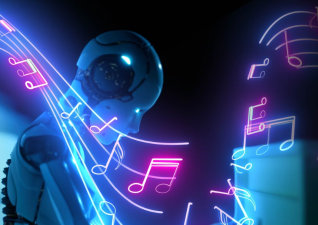
Using artificial intelligence to create film scripts and music is one of the important applications of AI technology in the cultural and creative industries. Using AI to create film scripts and music has already become a reality, and with the continuous development of technology, the application prospects of AI in the cultural and creative fields will become increasingly broad. However, it is important to note that although AI can generate high-quality drafts, the wisdom and artistic sense of human creators remain indispensable. Therefore, in the process of AI-assisted creation, cooperation and complementarity between humans and AI will be key.
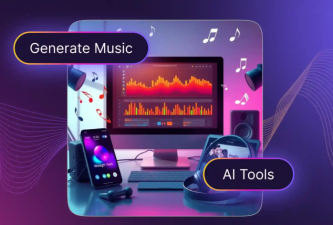
The following introduces how to use artificial intelligence to create movie scripts and music:
Using artificial intelligence to create movie scripts
- Technical basis: Large language models (LLMs): Using cutting-edge natural language processing technologies, such as the GPT series of models, these models can understand and use large-scale text data to provide a steady stream of inspiration and materials for script creation.
- Multi-agent simulation: Through multi-agent simulation technology, intelligent control of situation setting, story development and character behavior can be achieved. Different agents represent different roles. They can intelligently adjust the actions and decisions of the characters according to the development of the plot, so that the story presents a more natural and coherent plot advancement.
- Diffusion model: Customized diffusion models can further enhance the innovation and uniqueness of creation, so that each script has unique characteristics.
Specific methods:
- Input story outline: Users can input the general outline or theme of the story into the AI system, and the system will generate a preliminary plot framework based on this information.
- Intelligent generation and adjustment: The AI system will intelligently generate plots, dialogues, character descriptions, etc. based on the input synopsis. At the same time, the system will also intelligently adjust the character's behavior and decision-making according to the development of the plot to ensure the coherence and rationality of the story.
- Human editing and optimization: Although AI can generate the first draft of the script, human screenwriters are usually required to perform subsequent editing and optimization work to ensure the quality and artistry of the script.
Actual cases:
- ShowRunner-Agents: This is an artificial intelligence company focusing on drama creation. The technology they have developed has been able to generate high-quality drama content. In addition, there is the TV series "Westland Chronicles" which is completely directed and performed by AI. The series combines large-scale language models, diffusion models, and multi-agent technology to generate a complete TV series by inputting the title and synopsis of the story.
Using artificial intelligence to create music
Technical basis:
- Deep learning and neural networks: Through the application of deep learning and neural networks, machines can automatically extract the rules and characteristics of musical elements such as notes, chords, and melodies from a large amount of music data.
- Data analysis and mining: Artificial intelligence can analyze and mine a large amount of music data, find out the rules and trends in music creation, and provide inspiration and reference for music creation.
Specific methods:
- Input creation requirements: Users can input creation requirements such as music style, emotional tone, etc. to the AI music creation system.
- Intelligent generation of music: The system will intelligently generate music works that meet the requirements according to the user's needs. This includes all musical elements such as melody, harmony, and instrumentation.
- Editing and mixing: Although AI can generate a draft of music, human musicians are usually required to perform subsequent editing and mixing to ensure the quality and artistic effect of the music.
Actual cases:
- Suno AI: This is a music creation tool developed by AI startup Suno, known as the "ChatGPT" in the music industry. It can generate complete songs based on user prompts in a short time, including lyrics, melody, harmony, and instrumentation. In addition, there are AI music creation software such as Magenta Studio, Boomy, AIVA, Soundful, etc., each of which has different characteristics and advantages to meet the needs of different users.
Conclusion
-
 AI
Should kids use AI for homework help?
In recent years, with the popularity of artificial intelligence tools, more and more middle school students have begun to use AI to assist in completing homework. Just take a photo of the question, and AI can quickly generate the answer without inputting instructions or thinking. This type of "AI homework assistant" has quickly become popular on major social platforms and learning apps, attracting widespread attention from teachers and parents. A survey data shows that about 46% of students use AI tools to complete homework to varying degrees, especially Chinese, English and liberal arts subjective questions have become AI "high-incidence areas". So, how to judge whether children are using AI to do homework? How to guide children to use AI reasonably instead of relying on it to "take shortcuts"?
-
 AI
Should artists worry about AI-generated art?
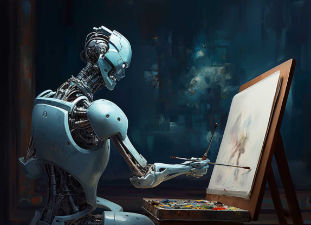
The birth of artificial intelligence has had a significant impact on artists. In the traditional field of art creation, some artists, especially illustrators, are very worried that AI will erode their living space. After all, the speed at which artificial intelligence can be generated is incomparable to that of humans. In addition, the professionalism of human artists has also been challenged. After all, regardless of whether they have painting skills, anyone can input text descriptions and let artificial intelligence automatically generate rich pictures. This ability makes artists feel unprecedented threats.
-
 AI
Who Controls AI — Humans or Algorithms?
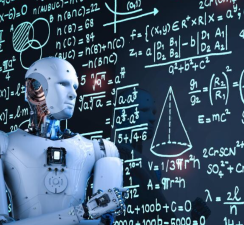
The rapid development of science and technology has made artificial intelligence (AI) a hot topic in contemporary society. While we enjoy the convenience and efficiency brought by artificial intelligence, we can't help but wonder: Will artificial intelligence have independent consciousness, or will it always be controlled by humans? The issue of control over artificial intelligence involves multiple levels, including technological, social, and philosophical ones. Currently, AI systems are primarily designed, deployed, and regulated by humans, but as algorithmic complexity increases, the dynamic relationships of control become more intricate. Artificial intelligence is not merely about passively identifying existing knowledge in a knowledge base; it requires enabling machines to learn autonomously. This raises concerns that once robots possess autonomous learning capabilities, their evolutionary capacity may surpass that of humans, to the point that one day robots may outpace humans. Perhaps the solution in the future is to establish some kind of "contract" between humans and robots, which would make powerful robots submit to "weak" humans.