Should kids use AI for homework help?
In recent years, with the popularity of artificial intelligence tools, more and more middle school students have begun to use AI to assist in completing homework. Just take a photo of the question, and AI can quickly generate the answer without inputting instructions or thinking. This type of "AI homework assistant" has quickly become popular on major social platforms and learning apps, attracting widespread attention from teachers and parents. A survey data shows that about 46% of students use AI tools to complete homework to varying degrees, especially Chinese, English and liberal arts subjective questions have become AI "high-incidence areas". So, how to judge whether children are using AI to do homework? How to guide children to use AI reasonably instead of relying on it to "take shortcuts"?
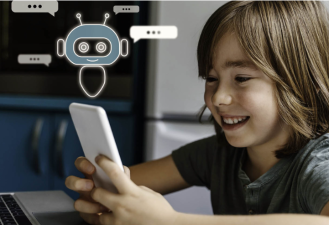
What problems may students bring when they frequently use AI?
Knowledge cannot be internalized, and learning effects are greatly reduced
Limited thinking ability and language expression ability
In the long run, it affects the competitiveness of further studies and employment
The issue of integrity cannot be ignored
How can parents judge whether their children use AI?
Parents can judge whether their children use AI homework assistants from the following points:
Is the homework level suddenly "leaping"?
Is the answer "excessive"?
Is the homework completed unusually fast?
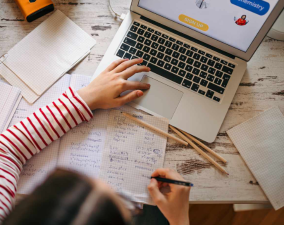
How should parents guide their children to use AI correctly?
Teach children to "learn to learn" with AI
Instead of banning them, it is better to teach children how to use AI to fill in the gaps. For example:
- Let AI generate a summary of knowledge points or a mind map
- Ask AI to simulate exam questions for self-test
- Use AI to help make English word cards or recite materials
Guide children to "digest and absorb" AI content
Encourage children to actively share what they have learned in school
Focus on the process rather than the result
-
 AI
Should artists worry about AI-generated art?
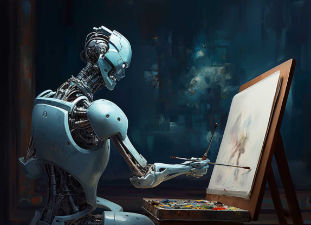
The birth of artificial intelligence has had a significant impact on artists. In the traditional field of art creation, some artists, especially illustrators, are very worried that AI will erode their living space. After all, the speed at which artificial intelligence can be generated is incomparable to that of humans. In addition, the professionalism of human artists has also been challenged. After all, regardless of whether they have painting skills, anyone can input text descriptions and let artificial intelligence automatically generate rich pictures. This ability makes artists feel unprecedented threats.
-
 AI
Who Controls AI — Humans or Algorithms?
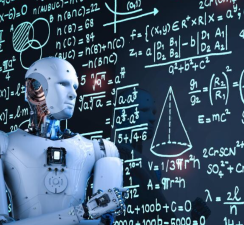
The rapid development of science and technology has made artificial intelligence (AI) a hot topic in contemporary society. While we enjoy the convenience and efficiency brought by artificial intelligence, we can't help but wonder: Will artificial intelligence have independent consciousness, or will it always be controlled by humans? The issue of control over artificial intelligence involves multiple levels, including technological, social, and philosophical ones. Currently, AI systems are primarily designed, deployed, and regulated by humans, but as algorithmic complexity increases, the dynamic relationships of control become more intricate. Artificial intelligence is not merely about passively identifying existing knowledge in a knowledge base; it requires enabling machines to learn autonomously. This raises concerns that once robots possess autonomous learning capabilities, their evolutionary capacity may surpass that of humans, to the point that one day robots may outpace humans. Perhaps the solution in the future is to establish some kind of "contract" between humans and robots, which would make powerful robots submit to "weak" humans.
-
 AI
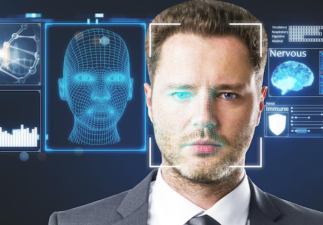
The Line Between Human and AI Content Is Blurring
The field of artificial intelligence has developed rapidly in recent years, which has attracted widespread attention. At the same time, the boundary between artificial intelligence and human intelligence has gradually become blurred and sometimes difficult to distinguish. However, we must be clear that the root of artificial intelligence is still the creation of human intelligence. With the rapid development of computing technology, we are entering a new era of deep integration of digital and physical, in which the intelligence of external devices, breakthroughs in brain-computer interfaces, the widespread application of artificial intelligence and robots, and innovations in the biomedical field have jointly drawn a blueprint for the gradual disappearance of the boundary between humans and robots.