
Did Third-Party Candidates Change the Game?
The United States is a presidential country, but what is the purpose of the Electoral College system? To prevent the majority from tyranny? To protect state rights? None of them, but to protect the party machinery of the two major parties, the Democratic and Republican parties. On the surface, the members of the House of Representatives come from various constituencies and are the "representatives of the people" of the United States. There is no need for the majority of voters to reflect their will in the presidential election. The U.S. The Senate protects the state rights of each state. The terms of office of the two senators in each state are staggered, and the will of state voters in different time periods can be protected at different time periods.
-
 Elections
Third Parties Are Gaining Ground Again
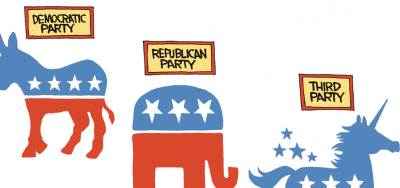
The reason why the United States has not formed a third party is mainly due to the design of its political system and the particularity of its electoral system. The two-party system is deeply rooted, and the Democratic Party and the Republican Party have a solid foundation in all aspects such as politics, economy, and society. In addition, the single-member district election method makes it difficult for small parties to gain enough support, resulting in voters often choosing major parties with a chance of winning rather than small parties. This situation further suppresses the development space of the third party, making it difficult for it to gain a foothold nationwide. Coupled with the disadvantages of resources such as funds and media coverage, small parties are even more difficult to compete. In short, historical, institutional and realistic factors jointly affect the party structure in the United States, and it is difficult for a third party in the true sense to emerge.
-
 Elections
The Youth Vote May Have Tipped the Scale
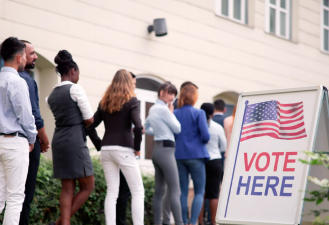
Young people's voting plays an important role in political and social change, especially in some key elections or referendums. For example, in the Brexit referendum, although the proportion of people who want to leave the EU increases with age, young people as a whole tend to stay in the EU, which shows their influence in determining the direction of society.
-
 Elections
Are Election Laws Getting Stricter or Smarter?
In the current American political environment, the complexity of democracy is becoming more and more obvious, especially in the context of the 2024 election. In order to explore this complex situation in depth, this article aims to analyze the evolution of American election laws, voter behavior patterns, and the future direction of democracy. The mentioned ballots, voter turnout, and the role of Latino voters are all important factors that affect election results and the health of democracy.